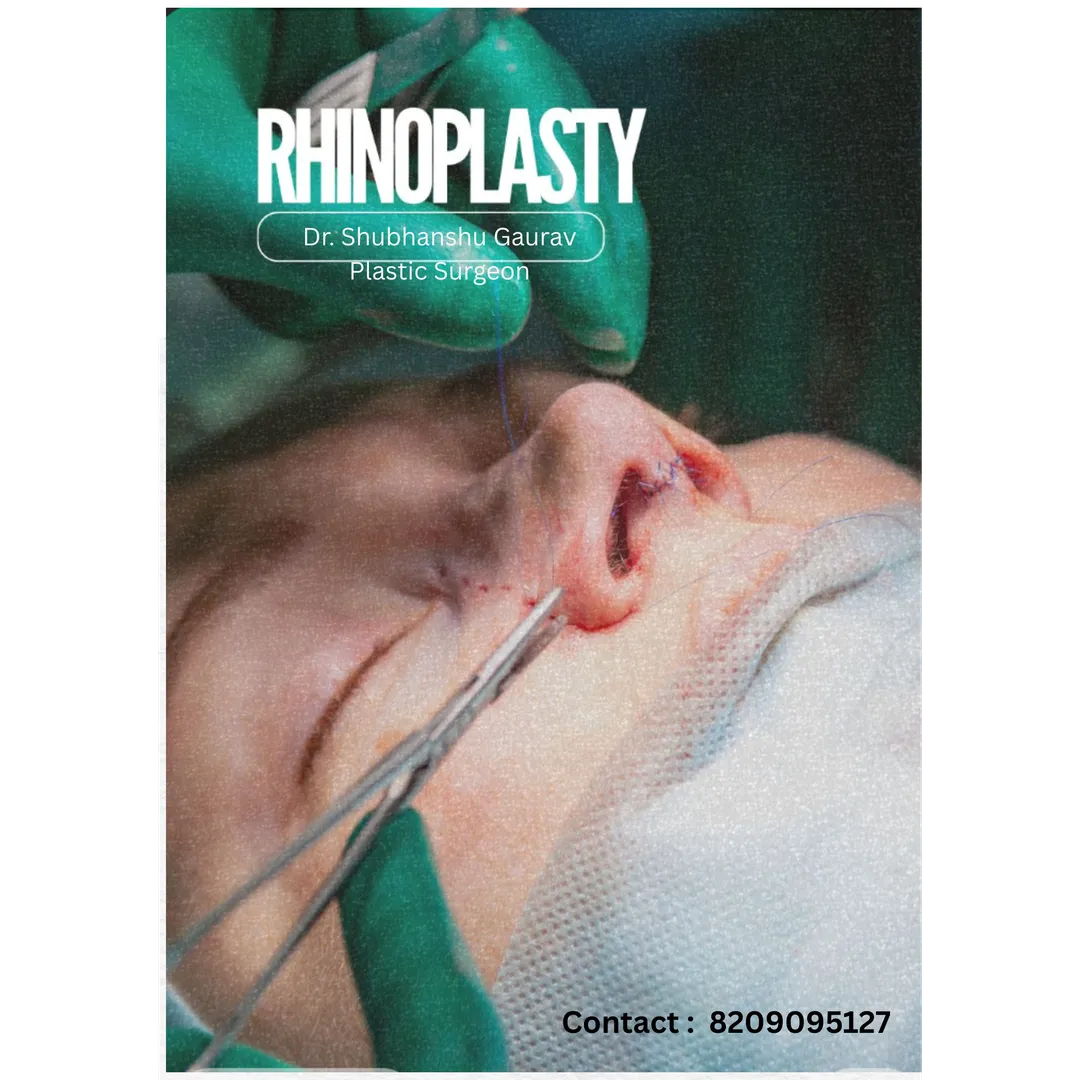
Rhinoplasty
Rhinoplasty is one of the most delicate and complex procedures in aesthetic plastic surgery. Unlike many other cosmetic surgeries, the nose is not only a central aesthetic unit of the face but also a vital functional organ responsible for breathing. Even a few millimeters of change can significantly alter facial harmony as well as nasal function. That is why rhinoplasty demands deep anatomical understanding, surgical restraint, and long-term vision rather than aggressive reshaping.
I have received focused rhinoplasty training and extensive surgical exposure under Dr. Kapil Agarwal, a world-renowned rhinoplasty surgeon, where I assisted and participated in rhinoplasty surgeries for more than five years. During this period, I was closely involved in primary, complex, and challenging secondary (revision) rhinoplasty cases, including structural reconstructions using costal cartilage grafts. This experience has provided invaluable insight into both ideal outcomes and complications that can arise even in seemingly “small” rhinoplasty procedures.
One of the most important lessons in rhinoplasty is this:
once a nose is over-operated or botched, it becomes significantly more difficult to correct. Revision rhinoplasty is far more complex than primary surgery because of scar tissue, distorted anatomy, weakened support structures, and limited graft availability. Therefore, conservative planning and structural preservation are always preferred over excessive reduction or shortcuts.
Philosophically, rhinoplasty is not about making a nose “small” or “sharp”; it is about creating facial balance while maintaining natural ethnicity, function, and long-term stability. In men, hair defines identity and confidence; similarly, in females, the nose plays a central role in facial aesthetics, profile harmony, and overall perception of beauty. A well-balanced nose enhances the entire face, while an unnatural nose immediately draws attention.
In my practice, I strongly believe in structural rhinoplasty principles. I am selective about the use of synthetic nasal implants because the nose is a dynamic, functional, and highly visible organ. Implants, when used indiscriminately, may lead to long-term complications such as infection, extrusion, visibility, or unnatural contour. Whenever possible, I prefer autologous cartilage grafts (septal, ear, or rib/costal cartilage) for safer, more stable, and biologically compatible results.
Rhinoplasty requires:
• Gentle tissue handling
• Precise structural support
• Respect for nasal airway function
• Understanding of thick Indian skin anatomy
• Long-term aesthetic foresight
Every nose is unique, and there is no “one-size-fits-all” rhinoplasty. My approach focuses on natural, breathable, and structurally sound noses rather than overdone or artificial results. The aim is refinement, not identity change.
Ultimately, rhinoplasty is a surgery of millimeters, judgment, and patience. When performed with meticulous planning, ethical case selection, and delicate surgical technique, it can produce elegant, natural, and long-lasting results while preserving both beauty and function.
Original Article:
Optimising Rhinoplasty Outcomes
in Short, Depressed and Thick-skinned
Indian Noses: Practical Techniques
Without Supratip Skin Thinning
Kapil Shriniwas Agrawal1 and Shubhanshu Gaurav1
International Journal of Aesthetic
Plastic Surgery
1(1) 37–45, 2025
The Author(s) 2025
Article reuse guidelines:
in.sagepub.com/journals-permissions-india
DOI: 10.1177/30499240251326432
journals.sagepub.com/home/aep
Rhinoplasty can address:
• Broad or wide nose
• Dorsal hump (high nasal bridge)
• Depressed or low nasal bridge (common in Indian noses)
• Bulky or drooping nasal tip
• Deviated nose
• Asymmetry
• Post-traumatic nasal deformity
• Thick skin nasal tip definition issues
Rhinoplasty is one of the most delicate and complex procedures in aesthetic plastic surgery. Unlike many other cosmetic surgeries, the nose is not only a central aesthetic unit of the face but also a vital functional organ responsible for breathing. Even a few millimeters of change can significantly alter facial harmony as well as nasal function. That is why rhinoplasty demands deep anatomical understanding, surgical restraint, and long-term vision rather than aggressive reshaping.
I have received focused rhinoplasty training and extensive surgical exposure under Dr. Kapil Agarwal, a world-renowned rhinoplasty surgeon, where I assisted and participated in rhinoplasty surgeries for more than five years. During this period, I was closely involved in primary, complex, and challenging secondary (revision) rhinoplasty cases, including structural reconstructions using costal cartilage grafts. This experience has provided invaluable insight into both ideal outcomes and complications that can arise even in seemingly “small” rhinoplasty procedures.
One of the most important lessons in rhinoplasty is this:
once a nose is over-operated or botched, it becomes significantly more difficult to correct. Revision rhinoplasty is far more complex than primary surgery because of scar tissue, distorted anatomy, weakened support structures, and limited graft availability. Therefore, conservative planning and structural preservation are always preferred over excessive reduction or shortcuts.
Philosophically, rhinoplasty is not about making a nose “small” or “sharp”; it is about creating facial balance while maintaining natural ethnicity, function, and long-term stability. In men, hair defines identity and confidence; similarly, in females, the nose plays a central role in facial aesthetics, profile harmony, and overall perception of beauty. A well-balanced nose enhances the entire face, while an unnatural nose immediately draws attention.
In my practice, I strongly believe in structural rhinoplasty principles. I am selective about the use of synthetic nasal implants because the nose is a dynamic, functional, and highly visible organ. Implants, when used indiscriminately, may lead to long-term complications such as infection, extrusion, visibility, or unnatural contour. Whenever possible, I prefer autologous cartilage grafts (septal, ear, or rib/costal cartilage) for safer, more stable, and biologically compatible results.
Rhinoplasty requires:
• Gentle tissue handling
• Precise structural support
• Respect for nasal airway function
• Understanding of thick Indian skin anatomy
• Long-term aesthetic foresight
Every nose is unique, and there is no “one-size-fits-all” rhinoplasty. My approach focuses on natural, breathable, and structurally sound noses rather than overdone or artificial results. The aim is refinement, not identity change.
Ultimately, rhinoplasty is a surgery of millimeters, judgment, and patience. When performed with meticulous planning, ethical case selection, and delicate surgical technique, it can produce elegant, natural, and long-lasting results while preserving both beauty and function.
Original Article:
Optimising Rhinoplasty Outcomes
in Short, Depressed and Thick-skinned
Indian Noses: Practical Techniques
Without Supratip Skin Thinning
Kapil Shriniwas Agrawal1 and Shubhanshu Gaurav1
International Journal of Aesthetic
Plastic Surgery
1(1) 37–45, 2025
The Author(s) 2025
Article reuse guidelines:
in.sagepub.com/journals-permissions-india
DOI: 10.1177/30499240251326432
journals.sagepub.com/home/aep
Rhinoplasty can address:
• Broad or wide nose
• Dorsal hump (high nasal bridge)
• Depressed or low nasal bridge (common in Indian noses)
• Bulky or drooping nasal tip
• Deviated nose
• Asymmetry
• Post-traumatic nasal deformity
• Thick skin nasal tip definition issues
Keywords