Earlobe Repair Surgery (Split Earlobe, Reduction & Reconstruction)
Cultural & Aesthetic Perspective on Earlobes
In many cultures, larger and well-formed earlobes are considered a sign of wisdom, prosperity, and trustworthiness. If you observe traditional depictions of Gautama Buddha, the elongated and prominent earlobes symbolize knowledge, calmness, and a blessed personality.
From an aesthetic plastic surgery point of view, the goal of earlobe repair is not just closure of a split but restoration of a natural, harmonious lobule that suits the face. Some patients prefer smaller, compact earlobes (reduction), while others want fuller, youthful earlobes (reconstruction or lobule transposition).
So, earlobe surgery is not only a repair procedure but also an aesthetic customization — whether it is split earlobe correction, keloid excision, endo-earlobe reduction, or full lobule reconstruction — while preserving natural proportions and facial balance.
What is earlobe repair surgery?
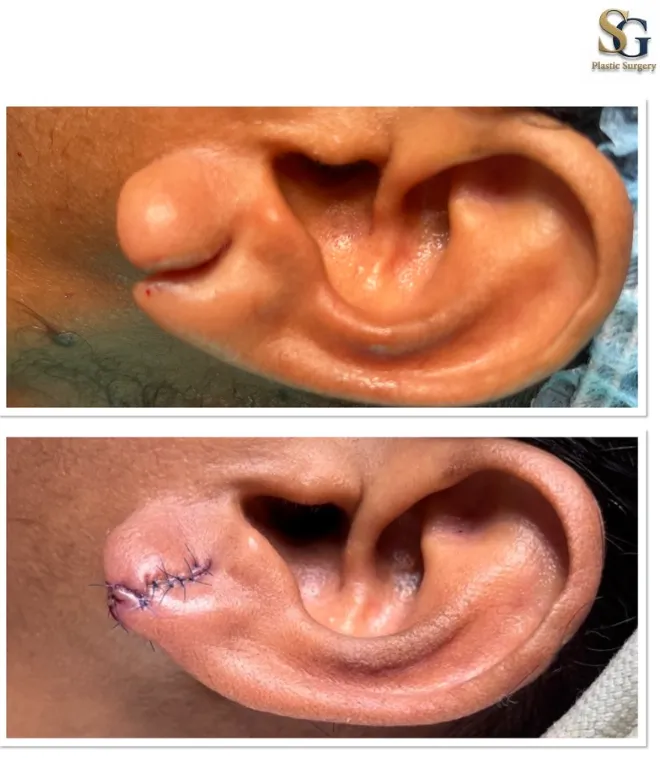
Earlobe repair is a minor cosmetic procedure to correct split, torn, stretched, elongated, or damaged earlobes caused by heavy earrings, trauma, gauges, or previous poor repairs. It restores the natural shape, symmetry, and aesthetics of the ear lobule.
Why should earlobe repair be done by a plastic surgeon?
Many practitioners attempt earlobe repair using glue or very basic closure techniques, which can lead to notching, thick scars, or unnatural lobule shape. A plastic surgeon performs meticulous layered repair using refined techniques like Pardue flap modification, Z-plasty (when required), and aesthetic contouring to achieve a natural and long-lasting result.
What conditions can be treated with earlobe surgery?
• Split earlobe (partial or complete)
• Stretched earlobe due to heavy earrings
• Elongated or sagging earlobes
• Ear keloid or thick scar on lobule
• Deformed or asymmetrical earlobes
• Large piercing hole correction
• Lobule reconstruction (full earlobe creation in selected cases)
What is split earlobe repair?
Split earlobe repair involves freshening the edges of the tear and reconstructing the lobule with precise suturing techniques to maintain a natural contour and prevent notching.
Do you perform earlobe reduction or reshaping?
Yes. Endo-earlobe reduction and aesthetic lobule reshaping can be done to reduce bulky, elongated, or disproportionate earlobes for a more balanced facial appearance.
Can keloid of the earlobe be treated surgically?
Yes. Earlobe keloids can be excised carefully, often combined with adjunct therapies (like pressure therapy or injections) to reduce recurrence and improve cosmetic outcome.
Is full earlobe reconstruction possible?
Yes. In cases of severe damage, trauma, or previous multiple failed repairs, complete earlobe reconstruction (lobule transposition or flap-based reconstruction) can be performed to recreate a natural-looking earlobe.
What type of anesthesia is used?
Earlobe repair is usually performed under local anesthesia. It is a comfortable, quick, and daycare procedure.
How long does the procedure take?
• Procedure Time: 30–60 minutes (per ear)
• Day-care surgery (no hospital admission required)
Will there be visible scars?
Scars are minimal and placed along natural lobule contours. With meticulous plastic surgical techniques, scars heal very fine and inconspicuous over time.
When can I re-pierce my ear after repair?
Re-piercing is usually advised after 6–8 weeks, once complete healing has occurred and tissue strength is adequate.
Is the result permanent?
Yes, results are long-lasting if proper healing occurs and heavy earrings are avoided during the initial months after repair.
What is the recovery period?
• Mild swelling: 3–5 days
• Suture removal: 10 days
• Back to routine: Next day (usually)
Why is meticulous technique important in earlobe repair?
The earlobe is a delicate aesthetic unit of the face. Techniques like precise flap design, Z-plasty (in selected cases), and tension-free closure help prevent notching, recurrence of split, and unnatural deformity, ensuring a symmetrical and natural-looking lobule.
Why Do Ear Keloids Come Back Even After Surgery?
Why is ear keloid treatment different from simple earlobe repair?
Ear keloids are not just a scar or a cosmetic lump — they are a result of an internal genetic tendency of abnormal scar formation. Simply cutting the keloid and closing it aesthetically (simple excision and suturing) often leads to recurrence, and sometimes the keloid can come back larger than before.
Can keloids be permanently cured?
No treatment in the world can guarantee 100% permanent cure of keloids. They behave like chronic scar disorders with a genetic predisposition. The goal of treatment is control, reduction in size, symptom relief, and aesthetic improvement — not absolute eradication.
Why do keloids recur even after proper surgery?
Even with meticulous surgical excision, the body’s overactive scar response can produce excessive collagen again. I have personally seen patients returning after 5–10 years with recurrence or even larger keloids despite previous surgeries done elsewhere or earlier. This highlights that keloid biology is stronger than simple surgical closure.
Is keloid similar to other chronic conditions?
Yes, in a practical sense, keloids behave like chronic conditions such as psoriasis or urticaria — they can be controlled and managed over time but may not be completely “cured” permanently.
What is the ideal approach for ear keloid management?
Best results are achieved with a multimodal, long-term management plan, which may include:
• Surgical excision (careful and tension-free)
• Serial intralesional steroid injections
• Pressure therapy (compression earrings)
• Silicone gel/sheet therapy
• Regular follow-up sessions
Should patients expect multiple sessions?
Yes. Keloid treatment is rarely a one-time procedure. Multiple sittings and long-term follow-up are essential to reduce recurrence risk and maintain the result.
Is aggressive cutting of keloid advisable?
Over-aggressive or repeated simple excision without adjunct therapy can worsen the condition and stimulate larger recurrence. Hence, a planned and staged approach by a plastic surgeon is crucial.
What is the realistic expectation from ear keloid treatment?
• Size reduction and better contour
• Symptom relief (itching, pain)
• Lower recurrence risk (not zero recurrence)
• Improved cosmetic appearance over time
Understanding the biological nature of keloids helps patients set realistic expectations — management is long-term, personalized, and requires patience, compliance, and regular follow-up for the best aesthetic and functional outcome.
Cultural & Aesthetic Perspective on Earlobes
In many cultures, larger and well-formed earlobes are considered a sign of wisdom, prosperity, and trustworthiness. If you observe traditional depictions of Gautama Buddha, the elongated and prominent earlobes symbolize knowledge, calmness, and a blessed personality.
From an aesthetic plastic surgery point of view, the goal of earlobe repair is not just closure of a split but restoration of a natural, harmonious lobule that suits the face. Some patients prefer smaller, compact earlobes (reduction), while others want fuller, youthful earlobes (reconstruction or lobule transposition).
So, earlobe surgery is not only a repair procedure but also an aesthetic customization — whether it is split earlobe correction, keloid excision, endo-earlobe reduction, or full lobule reconstruction — while preserving natural proportions and facial balance.
What is earlobe repair surgery?
Earlobe repair is a minor cosmetic procedure to correct split, torn, stretched, elongated, or damaged earlobes caused by heavy earrings, trauma, gauges, or previous poor repairs. It restores the natural shape, symmetry, and aesthetics of the ear lobule.
Why should earlobe repair be done by a plastic surgeon?
Many practitioners attempt earlobe repair using glue or very basic closure techniques, which can lead to notching, thick scars, or unnatural lobule shape. A plastic surgeon performs meticulous layered repair using refined techniques like Pardue flap modification, Z-plasty (when required), and aesthetic contouring to achieve a natural and long-lasting result.
What conditions can be treated with earlobe surgery?
• Split earlobe (partial or complete)
• Stretched earlobe due to heavy earrings
• Elongated or sagging earlobes
• Ear keloid or thick scar on lobule
• Deformed or asymmetrical earlobes
• Large piercing hole correction
• Lobule reconstruction (full earlobe creation in selected cases)
What is split earlobe repair?
Split earlobe repair involves freshening the edges of the tear and reconstructing the lobule with precise suturing techniques to maintain a natural contour and prevent notching.
Do you perform earlobe reduction or reshaping?
Yes. Endo-earlobe reduction and aesthetic lobule reshaping can be done to reduce bulky, elongated, or disproportionate earlobes for a more balanced facial appearance.
Can keloid of the earlobe be treated surgically?
Yes. Earlobe keloids can be excised carefully, often combined with adjunct therapies (like pressure therapy or injections) to reduce recurrence and improve cosmetic outcome.
Is full earlobe reconstruction possible?
Yes. In cases of severe damage, trauma, or previous multiple failed repairs, complete earlobe reconstruction (lobule transposition or flap-based reconstruction) can be performed to recreate a natural-looking earlobe.
What type of anesthesia is used?
Earlobe repair is usually performed under local anesthesia. It is a comfortable, quick, and daycare procedure.
How long does the procedure take?
• Procedure Time: 30–60 minutes (per ear)
• Day-care surgery (no hospital admission required)
Will there be visible scars?
Scars are minimal and placed along natural lobule contours. With meticulous plastic surgical techniques, scars heal very fine and inconspicuous over time.
When can I re-pierce my ear after repair?
Re-piercing is usually advised after 6–8 weeks, once complete healing has occurred and tissue strength is adequate.
Is the result permanent?
Yes, results are long-lasting if proper healing occurs and heavy earrings are avoided during the initial months after repair.
What is the recovery period?
• Mild swelling: 3–5 days
• Suture removal: 10 days
• Back to routine: Next day (usually)
Why is meticulous technique important in earlobe repair?
The earlobe is a delicate aesthetic unit of the face. Techniques like precise flap design, Z-plasty (in selected cases), and tension-free closure help prevent notching, recurrence of split, and unnatural deformity, ensuring a symmetrical and natural-looking lobule.
Why Do Ear Keloids Come Back Even After Surgery?
Why is ear keloid treatment different from simple earlobe repair?
Ear keloids are not just a scar or a cosmetic lump — they are a result of an internal genetic tendency of abnormal scar formation. Simply cutting the keloid and closing it aesthetically (simple excision and suturing) often leads to recurrence, and sometimes the keloid can come back larger than before.
Can keloids be permanently cured?
No treatment in the world can guarantee 100% permanent cure of keloids. They behave like chronic scar disorders with a genetic predisposition. The goal of treatment is control, reduction in size, symptom relief, and aesthetic improvement — not absolute eradication.
Why do keloids recur even after proper surgery?
Even with meticulous surgical excision, the body’s overactive scar response can produce excessive collagen again. I have personally seen patients returning after 5–10 years with recurrence or even larger keloids despite previous surgeries done elsewhere or earlier. This highlights that keloid biology is stronger than simple surgical closure.
Is keloid similar to other chronic conditions?
Yes, in a practical sense, keloids behave like chronic conditions such as psoriasis or urticaria — they can be controlled and managed over time but may not be completely “cured” permanently.
What is the ideal approach for ear keloid management?
Best results are achieved with a multimodal, long-term management plan, which may include:
• Surgical excision (careful and tension-free)
• Serial intralesional steroid injections
• Pressure therapy (compression earrings)
• Silicone gel/sheet therapy
• Regular follow-up sessions
Should patients expect multiple sessions?
Yes. Keloid treatment is rarely a one-time procedure. Multiple sittings and long-term follow-up are essential to reduce recurrence risk and maintain the result.
Is aggressive cutting of keloid advisable?
Over-aggressive or repeated simple excision without adjunct therapy can worsen the condition and stimulate larger recurrence. Hence, a planned and staged approach by a plastic surgeon is crucial.
What is the realistic expectation from ear keloid treatment?
• Size reduction and better contour
• Symptom relief (itching, pain)
• Lower recurrence risk (not zero recurrence)
• Improved cosmetic appearance over time
Understanding the biological nature of keloids helps patients set realistic expectations — management is long-term, personalized, and requires patience, compliance, and regular follow-up for the best aesthetic and functional outcome.
Keywords